

How Play Boosts Memory, Focus, and Problem-Solving in Children
Play is more than just a way for children to have fun. It’s one of the most powerful tools for learning and development. Through play, kids explore ideas, test boundaries, and strengthen essential mental skills. When children engage in playful activities, their brains form deeper connections that support memory, attention, and reasoning. Understanding how play influences these abilities helps parents and educators nurture growth in meaningful ways.
Understanding the Science Behind Play
 Play activates multiple regions of the brain at once. When children run, build, or imagine, they engage cognitive, emotional, and sensory systems. This active engagement promotes neural connections that support memory retention and critical thinking. Studies show that play-based learning leads to better recall and understanding than rote memorization. The joy of discovery makes information stick longer because it links emotions with experience. This natural process ensures learning happens in a way that feels effortless.
Enhancing Memory Through Active Learning
Children remember best when they experience learning rather than simply hearing it. Play creates those experiences. Whether it’s building blocks, memory games, or role-playing, these activities help kids practice recalling details and organizing information. Repetition through play also strengthens memory patterns. When a child repeats an action or idea in a game, their brain reinforces that pathway. This makes recalling facts or skills easier over time. Play gives memory a context, turning abstract lessons into real understanding.
Improving Focus and Attention Span
In a world filled with distractions, helping children build focus is essential. Play supports this by naturally encouraging concentration. When kids are deeply engaged in activities they enjoy, they practice sustained attention without even realizing it. Games with rules, such as puzzles or sports, require them to stay alert and follow steps. Over time, this practice transfers to academic tasks like reading and problem-solving. Through consistent play, children learn to control impulses and maintain attention for longer periods.
Encouraging Problem-Solving and Creativity

Play is often the first environment where children learn to solve problems independently. Whether they’re figuring out how to build a tower that doesn’t fall or creating new rules in a pretend game, they’re developing reasoning skills. These situations challenge them to think critically, experiment with solutions, and adapt when things don’t go as planned. This trial-and-error process nurtures creativity and flexibility skills that are vital both inside and outside the classroom. It’s through play that children learn there’s more than one way to find an answer.
Strengthening Social and Emotional Skills
Beyond memory and focus, play also teaches children how to interact with others. Games and group activities require communication, cooperation, and empathy. Kids learn to share ideas, negotiate turns, and handle both winning and losing. These social interactions shape emotional intelligence, which supports better focus and problem-solving. When children feel understood and valued during play, their confidence grows. This emotional balance improves overall learning and helps them perform better in challenging tasks.
Linking Physical Activity with Cognitive Growth
Physical play, such as running, climbing, or dancing, has direct effects on brain development. Movement increases blood flow to the brain, boosting alertness and concentration. It also releases endorphins, which improve mood and motivation. Activities that combine movement with thinking, like obstacle courses or rhythm games, train both body and mind. Regular active play helps children regulate their energy and stay focused during academic work. It’s a natural way to blend fitness with mental sharpness.
Integrating Play Into Everyday Learning
Play doesn’t need to be separate from learning. It can be part of it. Parents and teachers can turn lessons into playful experiences by adding imagination and interaction. Counting games, creative storytelling, and building projects make learning enjoyable while reinforcing key concepts. The goal is to create an environment where curiosity thrives. When children associate learning with enjoyment, they stay engaged longer. Incorporating play daily ensures continuous cognitive and emotional growth.
Supporting Long-Term Development Through Play
 The benefits of play extend well beyond childhood. Kids who grow up playing often show stronger problem-solving abilities, better emotional control, and improved focus as adults. Play builds habits of exploration and persistence that last a lifetime. It encourages a growth mindset, the belief that effort leads to improvement. Parents and educators should give play the utmost importance, recognizing it not as a break from learning but as the foundation of it. Encouraging regular, purposeful play helps shape capable and confident learners.
Play is not just recreation. It’s education in its most natural form. It strengthens memory, sharpens focus, and enhances problem-solving by engaging children’s minds and emotions together. Through every game, story, or adventure, kids are building the skills they’ll use throughout life. Providing them with time and space to play freely ensures they develop into thoughtful, creative, and resilient individuals. The joy of play truly fuels the power to learn.…



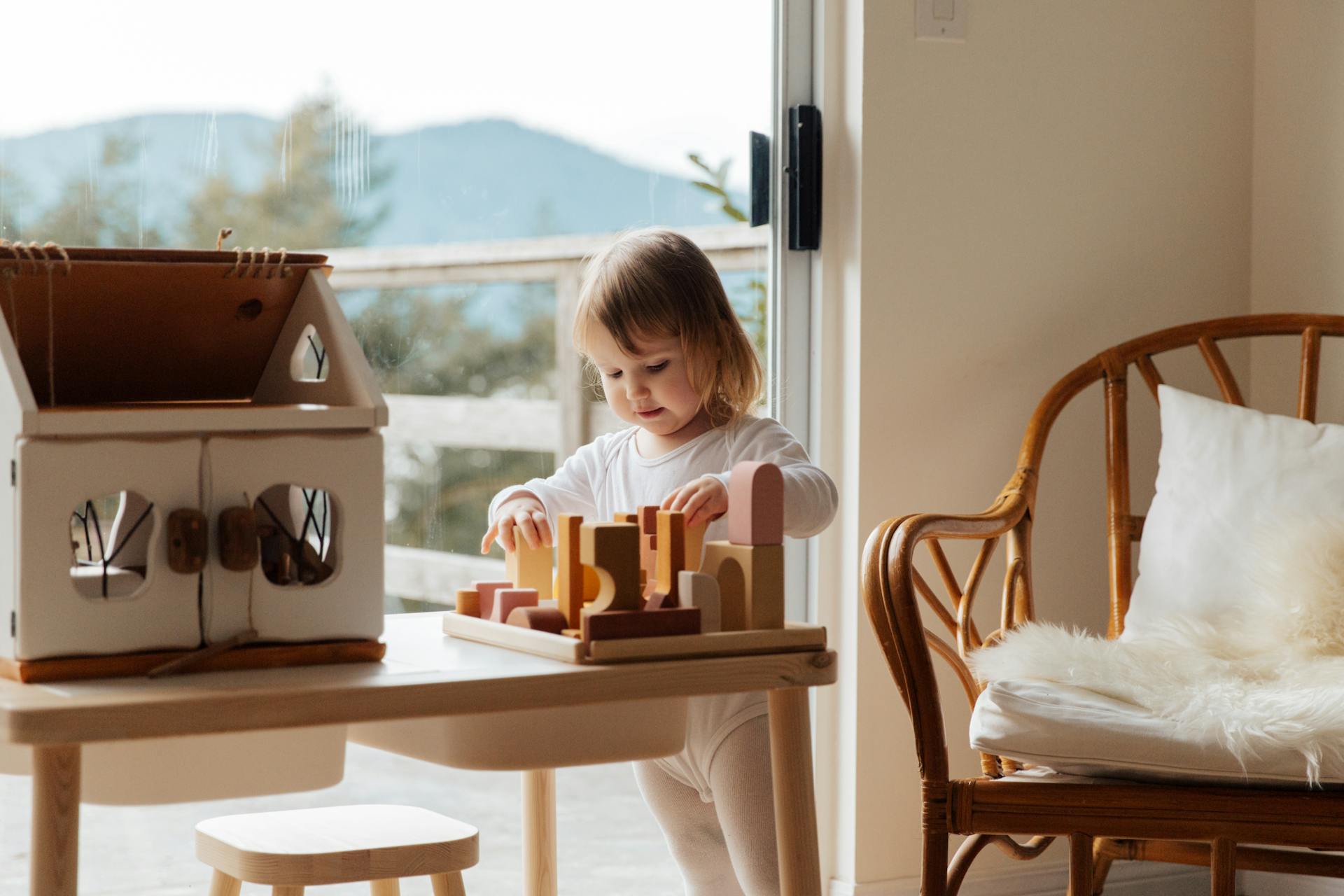
 There are many reasons why play is essential to a child’s development. First and foremost, play allows children to explore the world around them and make sense of their experiences. They can interact with objects and people through play, experiment with cause and effect, problem-solve, and build their creativity and imagination. Moreover, play offers opportunities for physical development. Running, jumping, throwing, and climbing contribute to a child’s gross motor skills and coordination. Fine motor skills are also honed through activities like drawing, painting, building with blocks, or playing with small toys. Play is also an essential tool for social and emotional development. In the play, children learn how to share, take turns, negotiate, and cooperate with others. They also have the chance to express and process their emotions, building resilience and coping skills.
 Parents and caregivers play a crucial role in promoting play in a child’s life. By creating a safe and stimulating environment for play, they provide children with the resources and materials needed to explore, learn, and grow. They can also actively participate in their child’s play, offering guidance and support when needed. Parents and caregivers can also encourage unstructured play time, where children are free to choose their activities and use their imagination without any adult direction. By doing so, they foster independence, self-regulation, and decision-making skills.


 The learning apps provide kids with lots of pictures and videos that make learning more fun. These days, learning
  Using the learning apps is convenient because children do not need to follow a strict timetable. Instead, children are flexible and can choose a suitable time to start their lessons. Likewise, the learners can choose a convenient time to review what they have learned even when they travel with their parents.
 It is essential to find a professional company ready to deliver the needed services to education affairs. Since there are various academic companies, it is advisable to research and know some of the tips you need to consider to hire an experienced one.
 When you are in college and need help with your homework, the best thing you need to do is get recommendations from your teachers and college students. For instance, your teachers will refer you to the best and reliable companies that can deliver satisfying homework writing services.
 Before hiring an assignment company, ensure you take your time and go through their work. In other words, you need to see the kind of work they deliver, and if it suits your quality needs, you can choose to work with them. However, if a specific company is not ready to share their past work with you, avoid their services.
 English is the main language used in business. Most of the business and fields of study use English. For areas like medicine, computer science and aviation, English is the language of study.

 Lack of fund is not a hindrance though if you really want to achieve your dreams. There are several ways on how you can finance your college education. You can either get a student loan or apply for scholarships. Both of which you can get from the government or private institutions.
 Most of the time, the qualifications for scholarship grants are based on the academic standing of a student. If he or she maintains the required grade, then the scholarship program will continue to finance the college education. On the other hand, if a scholarship grantee fails to maintain the requirements, then he will lose the privilege.
 One of the advantages of taking online guitar lessons is that you will meet quality guitar teachers. On this platform, there is no room for guesswork as far as the trainers are concerned. Most of the trainers who provide these services are usually experts in the field. Searching for an online guitar over the internet will give you a lot of option. You can therefore easy choose your tutor based on the skill level that you require.

 The first difference between the two systems is that while in the U.S. a teacher ought to possess state certification and license to teach, in India a teacher can begin teaching elementary classes after acquiring masters or bachelor degree.